Showing posts with label history lesson. Show all posts

Sunday, September 22, 2013

Karl Mag's (Or, Welcome to Chemnitz)

I live in the ghetto of Chemnitz.

And no, I'm not joking.

The area I live in - the Sonnenberg (literally "Sun Mountain") - is the sketchy and, as one German I know put it, "dangerous" part of town.

Of course, when Germans say that an area is "dangerous" to live in, they forget they're talking to someone who was born and raised on Chicago news and who has a totally different view of what a "dangerous neighborhood" means.

Dangerous to me means people are getting shot and murdered on their front porch or sidewalk.

Dangerous to Germans means vacant houses and stores filled with foreigners and poor people.

Luckily for the Germans, I am both a foreigner and poor, so I totally qualify to live in the German ghetto!
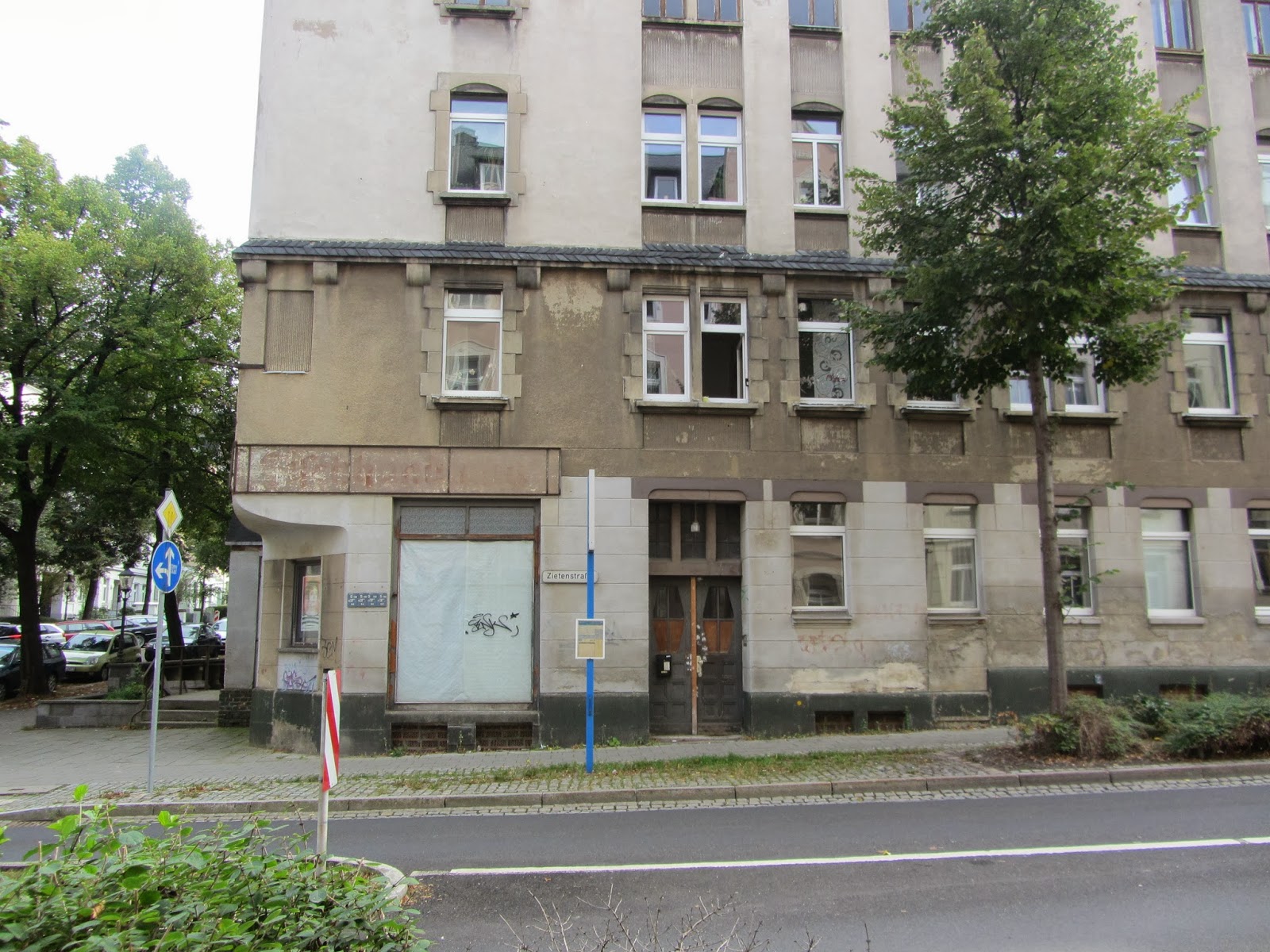
I told you I lived in the shady part of town.

But seriously, this is my building. 
Anyway, from the outside, it looks like I live in a condemned building, complete with boarded up windows, urban decay, and graffiti.

On the inside, however, my apartment is pretty nice complete with newly refurbished floors, windows, and appliances.  In fact, it's really nice.  Except for the whole no blinds thing.  (Sorry neighbors.)

I actually really like living on the Sonnenberg. Sure, it's a little creepy and vacant at night, but it's actually trying to shape up and become the "hipster" neighborhood.  (Case in point, we have a vegan cafe around the corner from me.  This baffles me, since typical German cuisine thrives on deep-fried meats and dairy.)

Anyway, the Sonnenberg was the the only part of Chemnitz that escaped the British bombing of WWII (just a few days before its neighbor, Dresden, was reduced to rubble) and the buildings here, although desperately in need of some TLC, still have the old facades from Chemnitz's glory days.

Across the street from me.

Back in the day, Chemnitz was a huge center for textile production and its sister city was Manchester, England.  The town's population exploded, workers flooded in from the fields to work in the factories, and the mill owners got rich quick.

Mehr Porridge bitte?
Dickensian Orphans aside, Chemnitz was a cool place to be back in the day.  (Well, if you weren't a worker, inhaling cotton fluff into your lungs, but I digress.)

Then WWII happened. 

And then the Soviets happened.

Instead of rebuilding the destroyed city and factories, like they did in Dresden, the Soviets gleefully clapped their hands together, realizing that a city with a large working population would make the perfect model for their ideal Soviet city.

Everything in the downtown, save the city hall and the Jakobskirche, were rebuilt and refashioned into the Soviet ideal.  Long, wide avenues built parallel to each other, perfect for Party parades, and stiff cement buildings were put into place.  

Inspired architectural choices.

Because nothing says "Celebrate the Working Man"
quite like a monstrous blob sculpture.

Even the crosswalk signs went through a remodel.

Although the Ampelmann is now a popular store in Berlin,
this is actually the happy Soviet worker going to work
and the happy Soviet worker appropriately
stopping at the crosswalk.
Oh, and Chemnitz, got a new name: Karl-Marx-Stadt.

Despite the fact that Karl Marx never lived, let alone, visited Chemnitz.

And they got this guy too:

A wild Karl appears when you least expect him.

His gaze goes right into your soul.
Did I forget to mention that Karl - aka "Der Nischel" (which is Saxon slang for the "The Head" and further proof that the Saxon dialect is crazy since it sounds nothing like the real German word "Kopf") - is a huge statue?
It's freakishly huge.

I wonder who that is?
Oh, that's me.
And Karl.
Although the residents of Chemnitz had the chance after the Wall fell to remove the Nischel and all the other Soviet-inspired art around the city, they decided to keep their bearded buddy around as a testament to their history.

The city was "rebuilt" again in the 90s with the influx of West German investors and the downtown is a bizarre hodgepodge of rebuilt pre-WWII, Soviet, and West German styles.

The old city hall and one of the new shopping malls.

More of city hall

A view down the street to the Jakobkirche

One of the old facades
(It also gets bonus points for being pink.)

Pigeons. The rats of the air.
Also old architecture.

The city convention center with its Soviet-chic style

The "Roter Turm" (Red Tower) is the last remaining piece
of the medieval city wall.  Next to it is the new Roter Turm,
which boasts 3 floors of shopping bliss, plus a movie theater.

I have no idea what this means but hooray for
Soviet art!

One last look at the soul crushing Soviet bloc housing.
Unlike its well-known brothers and sisters, Leipzig and Dresden, Chemnitz has neither the Old World charm, nor the political/historical force to compel tourists to visit.

But on the other hand, Chemnitz is quirky, unique, and always interesting.

I mean, what other city would have a permanent art installation to the fact that its on the same longitude as a large colony of penguins on the South Pole?

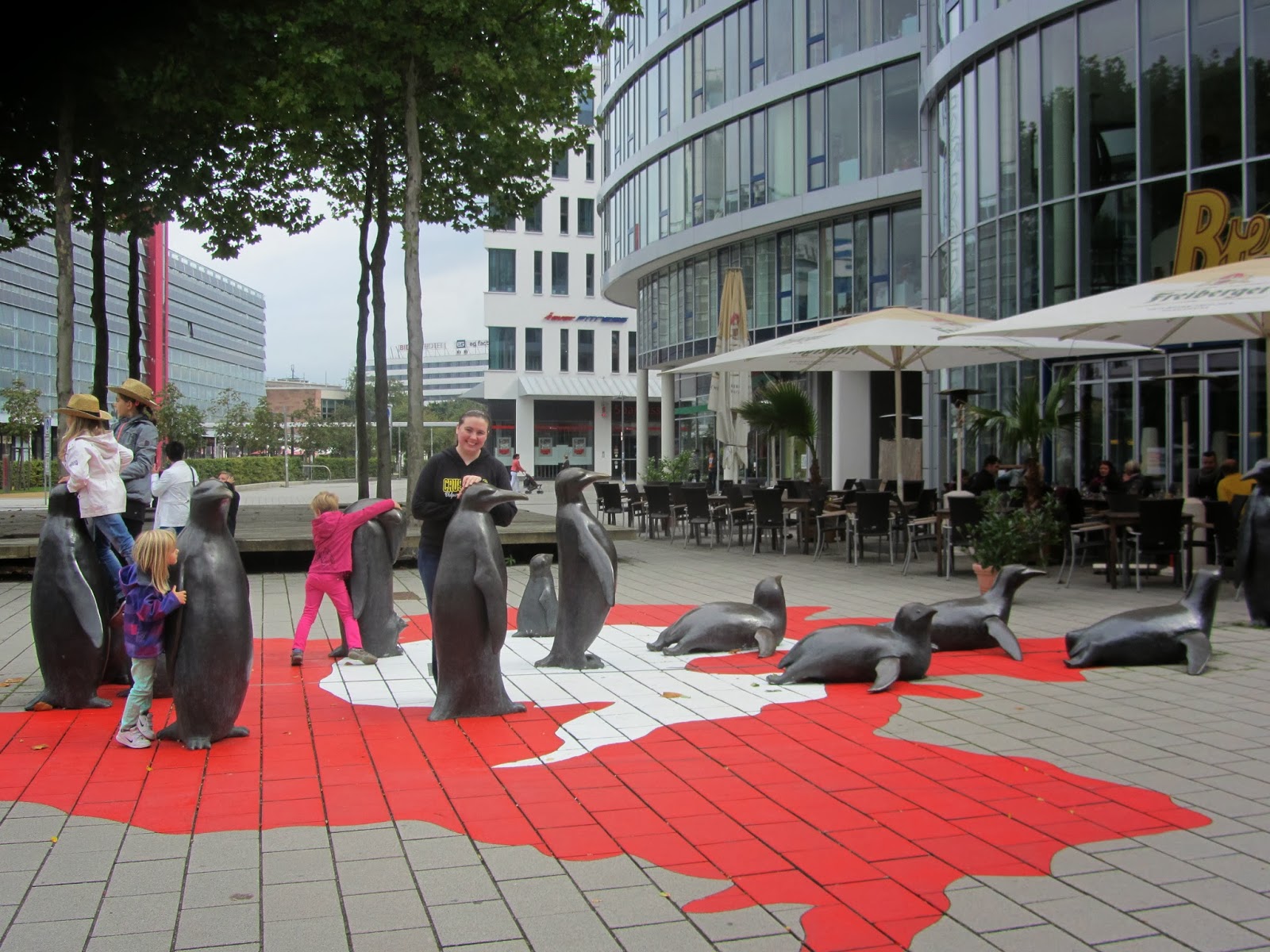


Oh, Chemnitz.


All My Love,
Your Humble Blogger
& Simba (Who Has Been Very Absent in These Posts)


PS. Bonus points for you lucky people who realized that the title of this post is a German pun on the name Karl Marx.  The phrase "Karl Mag's" (Karl likes...) is used in lots of advertisements across Chemnitz, and I desperately want a mug with it on there.

PPS.  If you're really cool, which you are since you're reading this Blog, you should like the Blog on Facebook. 

Tuesday, February 28, 2012

Fasching - Germany's Mardi Gras

Fat Tuesday. Mardi Gras. Carnival.  What ever you call that glorious day before Lent begins where you indulge in those things you're going to give up for the next 40 days.


Most Americans recognize it from New Orleans, because drunk co-eds flashing strangers to get cheap plastic beads is really the reason for the season.  It's tacky, it's totally gauche, and for some reason New Orleans seems to celebrate it year round.

In Germany, things are done a little more differently.  The whole Fat Tuesday thing, unlike America's Mardi Gras revels, actually still does have a basis in history and religion. 

Who's ready for the ultra-condensed version of religious history in Germay?!  

Up until the 1500s, the states and kingdoms of present day Germany were Catholic.  Then this dude named Martin Luther decided the system wasn't so cool and nailed some theses to a door.  The stuff hit the proverbial fan and there were lots of religious wars.  This was bad news for Europe and its already formed countries.  England turned Protestant (except for regular Ireland), France and Italy stayed Catholic, and Denmark and up became Protestant. Russia and Ottoman Empire laughed at everyone because they were Orthodox and too cool for that.

Germany was a different story, because Germany wasn't really a country.  Instead it was all these little states and kingdoms spread out.  Eventually, they would form Prussia and the Austrian-Hungarian Empire, but let's not get ahead of ourselves.  While the other countries were trying to deal...

Too soon?

...Germans were stabbing each other all over the place.  So eventually they got sick and tired of everyone dying and came up this brilliant solution: let the princes of each area pick which religion the people there would practice.  Needless to say, this became a huge political decision (not to mention the fact that it didn't really address the problem of people killing each other).  Most of Germany became Protestant and still is to this day.  And some little places in the southwest Alb mountains stayed Catholic.

Which brings us back to Fasching.  The still Catholic parts of Germany celebrated the last days of freedom before Lent by just well...going crazy. Wearing wooden masks based on the gargoyles of the churches, faces of witches and scary animals, revelers drove out demons and welcomed Lent.  

Not be outdone, the Northern Protestant parts of Germany developed their own tradition called Carnival.  When Napoleon invaded from Catholic France, Carnival fools used the that time of the year to protest their oppression without punishment. In fact, even today many political speeches and parodies of political speeches are given in Cologne (Köln, for you German lovers out there).   One of the most popular costume is that of the Funkenmariechen, which is Germany making fun (surprise!) of the French military costumes.

In your face, France!
During the Cold War, the Northern tradition of Carnival became a national thing for West Germany and the main cities to go to were Bonn (the capital of West Germany) and of course, Cologne.  After the Berlin Wall fell and Germany became whole again, the Germans who were deprived of a reason to party finally got it and Carnival came to Berlin.  Today, the places to party for Carnival are Berlin and Cologne.

But the Southwest corner of Germany forgoes that silliness and still does their own Fasching thing.  Now, yes, people still dress up in funny costumes and go to Fasching parties.

But here at this blog, we are above that.

Yeah, right.
Emily (as a cowgirl) and your Humble Blogger
(as a 1920s flapper who met up with Katy Perry's hair stylist)

Yikes!
We're a good looking bunch!
Our German friend Steffi invited us to this fun Fasching party with her.  The music was similar to the Stuttgarter Volksfest - lots of well-known German drinking songs and covers of pop classics.

The costumes were the coolest part.  Steffi was dressed up from the Grimm's fairy tale, the Star Taler, in a cute black dress covered in stars.  Our other German friend, Clara, was one of the blue birds from Angry Birds. It was super clever and funny. The crowd in the party was an eclectic bunch - there even was a guy dressed up this super scary tiger suit!  We all had a great time!


Silly costumes aside, we got a real Fasching experience during a parade in Rottenburg.  The parade featured different costumed groups from towns around the area.  Most of the traditional costumes feature wooden masks that are hand carved and passed down through the years.  Some of the oldest masks are valued up to 3,000 Euros!

A little boy waiting for the parade,
dressed up as the Frog Prince.
Too cute!


A "witch" stops to chat with his/her friends
before the parade starts.
These Fasching "fools" are called Narren.  In parades they are allowed into interact with the viewers - throwing out candy or heaving glitter/confetti onto the crowd.  The Narren are allowed to prank the viewers as well.  If you're wearing shoes with laces, be prepared for them to untie the laces and take them! Young women, especially if they are attractive or blonde, may be snatched up and carried for a couple of yards or thrown into hay bins and toted a long for a bit.  The Narren at this parade found a man with a bald spot and drew a flower on his head.  Some of the groups of Narren carry sticks that have an a balloon tied to it and smack people in the crowd with it.  Except it's no balloon - it's an inflated pig's bladder. Disgusting!

There were many groups of witches in the parade.

This girl got snatched and confetti'd

Poor thing.
We got glitter-cannon'd too.

I hate clowns.

Like any good parade, this one featured many bands too!

Even kids are part of the parade groups!

I think these are "bears"?


Ew.

Okay, that's cute.


The stuff of nightmares.

Seriously.


The witches build a pyramid.


A lot of the costumes are based on local things - like church gargoyles, farming animals, and even vineyard leaves.  At this point, you're probably wondering, what's with the bells?


Despite being super heavy and totally awkward, the parade walkers jump around with them, in time, and just keep marching.  The loud noises are supposed to scare away demons.  Or something like that.

So that's Fasching!

Next up: Paris!